
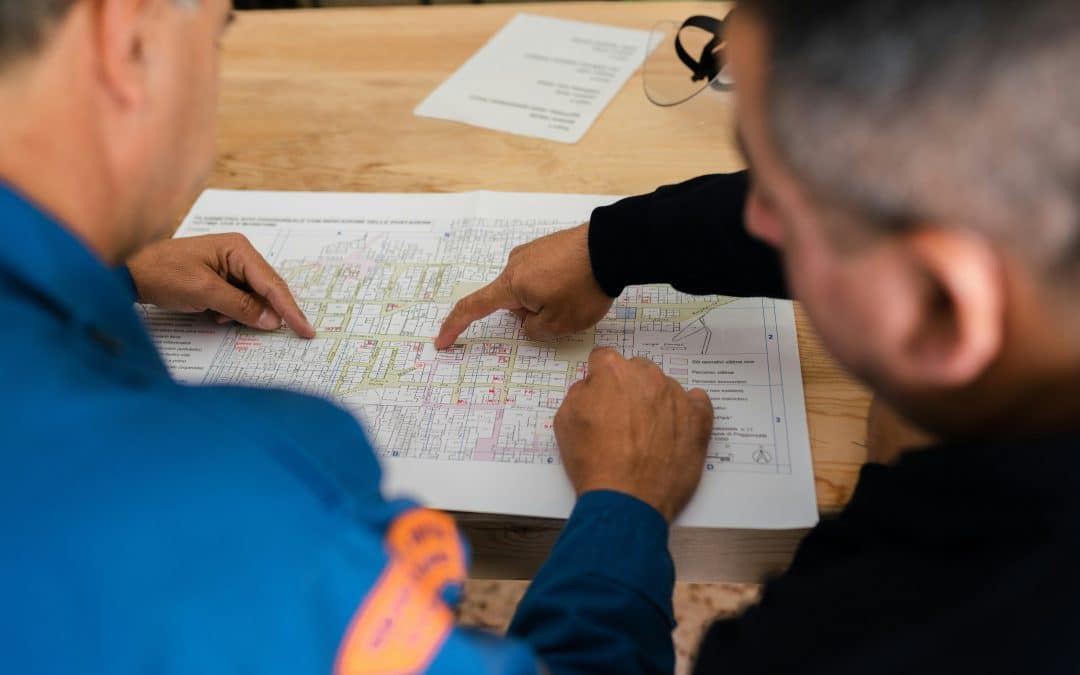
A fire plans examiner in Canada reviews building plans before construction starts, checking that all proposed construction is safe relative to fire and life safety, everything from exit capacity and fire‑resistance features to overall compliance with the applicable codes. Catch an error here, and it never makes it past the permit stage. Miss it, and it gets built into concrete and drywall.
That’s the work of a fire plans examiner. It’s a role that sits at the intersection of fire prevention and building regulation, and in Canada, the path to it looks different depending on where you’re starting from and which province you’re working in.
Key Takeaways
- Canada has no single national licence for fire plans examiners. The path runs through provincial building code qualifications where required, plus NFPA 1030-aligned training for the technical knowledge.
- A plan review covers several interlocking systems, occupancy classification, egress, fire separations, fire protection systems, and fire department access.
- A realistic timeline runs from foundational experience through core training to provincial exams and registration, followed by supervised on-the-job review.
- Demand for expertise is growing as municipal building departments face staffing gaps and rising permit volumes.
What Does a Fire Plans Examiner Do?
A fire plans examiner reviews permit applications, construction documents, and fire and life safety system designs to determine compliance with applicable codes, standards, and regulations before construction begins. The items for review vary depending on the jurisdiction, but the reviews require the examiner to understand building construction, occupancy classification, fire separations, means of egress, fire department access, water supply, and fire protection systems such as sprinklers, standpipes, and fire alarms. Fire plans examiners must also assess how the various building systems and design features interact to achieve the intended level of fire and life safety throughout the building.
The role overlaps with, but isn’t identical to, a building code plans examiner. In most provinces, a plans examiner working on fire-related components needs to interpret both the provincial building code and the fire code, since the two documents govern different but connected parts of a project. In Ontario, for example, the Building Code Act designates plans examiners, including those reviewing fire protection systems, as building practitioners who must hold specific technical qualifications under the Building Code before they can sign off on a review. That qualification structure, and the exams tied to it, is administered provincially rather than through one national body.
 Demand for this expertise is tied directly to construction activity, and that activity hasn’t slowed. The total value of building permits issued across Canada rose 14.9% to $13.8 billion in October 2025 (Statistics Canada), meaning more permit applications are moving through building departments that already need qualified reviewers.
What Credentials Do You Need to Become a Fire Plans Examiner in Canada?
Canada doesn’t have a single national licence for fire plans examiners. Instead, the credentials that carry weight fall into two categories, and most working examiners end up holding some combination of both.
1. Provincial Building Code Qualifications
In most provinces, people who review building plans for code compliance are expected to hold provincial building code qualifications in the relevant scope (for example, residential, small buildings, large buildings, or fire‑protection‑related categories). That usually means passing your province’s technical building code exams and registering with the applicable provincial system. The exact exam names and registration steps vary by province, but the underlying skill set of reading plans, applying the right code sections, and writing defensible comments is consistent across Canada.
-
NFPA-Based Standards and Certification
Where NFPA 1030 comes in is on the knowledge side. These standards define the job performance requirements for fire prevention and plan examination roles, and they’re the basis for training programs and for NFPA’s Certified Fire Plan Examiner (CFPE) credential. Even in provinces where the CFPE isn’t a legal requirement, it signals to a hiring department that you can read a fire protection system design and know what you’re looking at. Many Canadian training providers, FireWise included, build their plan examination curriculum around these standards specifically because they map cleanly onto what a working examiner is expected to know.
How Long Does It Take to Become a Fire Plans Examiner?
Timelines vary by province and by how much fire code or building code experience you’re bringing in, but a realistic path generally runs through these stages:
- Foundational experience (ongoing, before you start). Most exam and certification pathways expect a base of relevant experience, commonly around two years in fire prevention, inspection, or building permit review.
- Core training (a few months). Completing an NFPA 1030-aligned course covering fire prevention principles, code interpretation and plan review fundamentals.
- Provincial technical exams (weeks to a few months, depending on scheduling). Writing and passing the building code qualification exams required in your province.
- Registration (administrative, typically a few weeks). Registering your qualifications with the relevant provincial system.
- On-the-job application (first 6 to 12 months in the role). Reviewing real submissions under supervision until you’re catching the kind of errors that don’t show up in training scenarios.
None of these stages should be skipped. Across common certification paths, most first-attempt failures come down to weak code navigation and poor time management, not a lack of raw code knowledge. Scenario-based practice tends to be the missing piece.
What Skills Do You Need Before You Pursue Certification?
Whichever path you’re on, three things need to be in place before certification is worth pursuing.
Code Literacy
Code literacy comes first. That means being able to sit with a set of drawings and the relevant code book and connect the two without a lot of hand-holding. This is built through repetition, not through memorizing section numbers, and it’s the single biggest gap between someone who passes an exam and someone who can actually do the job on day one.
Occupancy Classification
Occupancy classification is the second piece, and it’s more consequential than it sounds. Almost every fire protection requirement in a building traces back to how the space is classified, so a mistake here cascades through the rest of a plan review. Examiners who struggle later in their careers usually trace it back to weak fundamentals here.
System Design
System design knowledge rounds it out. You don’t need to design a sprinkler system yourself, but you need to know enough about how one is designed to recognize when a submitted layout doesn’t add up.
Where you start determines which piece you’re missing and which one to prioritize first. But the fundamentals underneath all three paths don’t change: code literacy, occupancy classification, and system design knowledge, applied under the time pressure of a real permit queue.
What’s the Next Step?
Reviewing plans is a different discipline than inspecting a finished building or designing one. It rewards people who can hold a code book and a drawing set in their head at the same time and spot where they disagree.
If that sounds like the direction you or your department should be heading, it’s worth mapping out now. Get notified when Fire Plans Examiner Certification opens and start working through the decision on your own timeline.