
AI in Fire Investigation.
The defence lawyer has one more question. “Did you use artificial intelligence to prepare any part of this report?”
Your yes or no matters less than what comes next. What did the AI do, and how did you check it?
AI tools can save hours on the paperwork side of an investigation, like drafting interview transcripts or building a timeline from witness statements. They can also hand you a confident, well-written answer that is wrong. Used with care, AI gives you more time for the work that needs your judgment. Used carelessly, it gives opposing counsel an opening.
Can AI determine fire origin and cause?
No. AI can help you organize and prepare the records behind an investigation. The origin and cause determination stays with you.
That determination rests on the scientific method. NFPA 921, the Guide for Fire and Explosion Investigations, asks you to build hypotheses from the evidence and test each one against it. A chatbot can’t walk the scene or examine an arc site. It has no way to test a hypothesis against physical evidence.
Generative AI also has a known weakness. It can produce false statements and invented references with total confidence. NIST calls this “confabulation” in its Generative AI Profile. Polished language makes an answer sound reliable. The polish proves nothing.
Asking several chatbots the same question doesn’t help either. When two tools agree, you still haven’t tested anything. Specialized analytical software is a separate case. It needs validation for the task and conditions you’re using it for, plus someone qualified to interpret its limits.
What AI gets wrong: an e-bike charging fire example
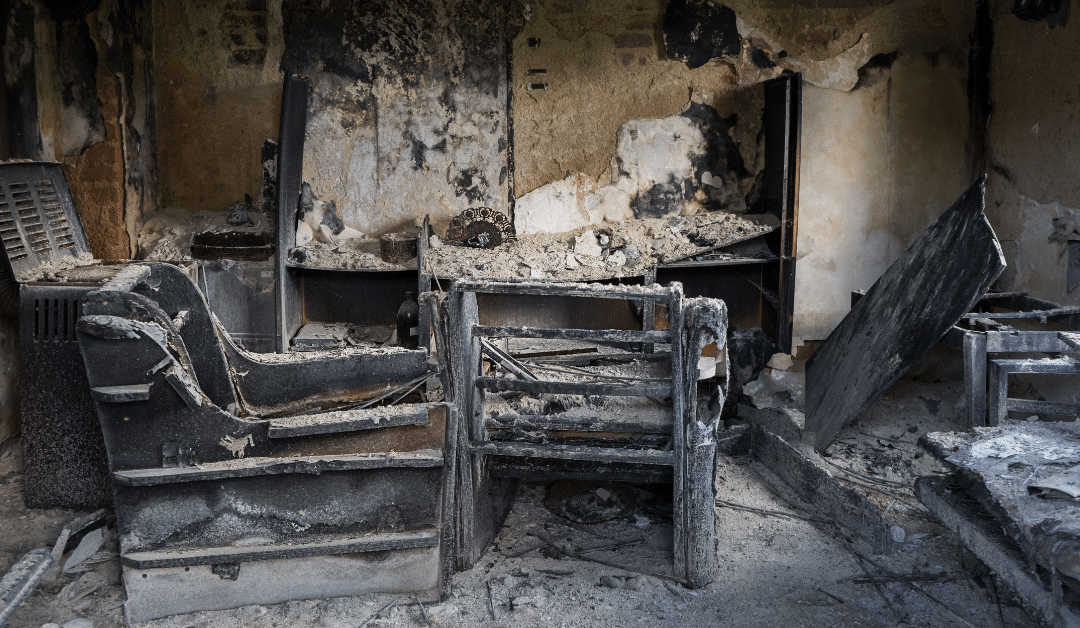
Picture a fictional workshop fire. An e-bike battery sat charging on a bench, plugged into a power strip. The battery is badly damaged. You feed your scene notes and witness statements into an AI tool and ask for a summary.
The summary comes back clean and confident. The battery caused the fire, it says, because it was charging and took the most damage.
That conclusion skips the real question. Battery involvement and the initiating cause are two separate questions. Heavy damage tells you the battery burned. It doesn’t tell you where the fire started.
Now give the AI a job it can actually do. For example, AI could help organize the records into a table of observations, sources, and unresolved questions. A useful instruction would be:
Using only the supplied records, prepare a source-linked chronology. Identify conflicting accounts, uncertain times and missing information. Do not determine origin or cause, and do not invent references or measurements.
You check that chronology against the originals. Then you list the credible alternative hypotheses and the evidence you need to test each one. Any uncertainty you can’t resolve stays visible in your report.
The AI saved you hours on the paperwork, but the thinking stayed with you.
A five-step framework for using AI in fire investigation
These five steps keep AI in a support role and help keep your work defensible.
Step 1: Define a limited task
An investigation can produce hundreds of photographs and pages of records. AI handles narrow jobs on that material well:
- Organizing records: draft an index or chronology with a source listed for every entry.
- Drafting transcripts: produce a first draft you then check against the recording, speakers and times included.
- Supporting research: suggest search terms and publications for you to find and read yourself.
- Preparing interviews: propose neutral questions and flag topics that need clarification.
- Improving report clarity: suggest an outline or clearer wording while keeping your observations and conclusions intact.
Pick one task and write it down before you start. Origin and cause stay off the list.
Step 2: Confirm permission for the tool and the data
Permission has to cover two things: the tool itself and the information you put into it. Confirm your agency authorizes both before you upload any case material.
Check privacy and confidentiality obligations first. Contract terms and legal privilege can also limit what you share. Then find out how long the provider keeps your inputs and whether it uses them to train its models.
Removing names doesn’t make a record safe. Medical details or a street address can still identify someone. Removing names doesn’t grant permission to upload, either. Send privileged communications, or anything you’re unsure about, to your legal adviser before processing.
If your team is new to these tools, practice on fictional case records first. You’ll learn the workflow without putting real investigation material at risk.
Step 3: Preserve the originals
Keep your original photographs and recordings untouched and clearly identified. Label every AI-assisted transcript or summary as a derivative, and link it back to its source.
Take extra care with images. Generative editing that adds or removes features can undermine a photo’s reliability as evidence. If you create AI illustrations for training, label them clearly and store them apart from incident evidence.
Step 4: Verify every output
Review every output before you rely on it. Open the actual publication and confirm the cited passage exists and applies to your incident. Trace each factual claim back to the source record. Watch for omissions and contradictions, and above all for details the tool invented.
Your testimony remains your testimony. You’re accountable for every word of it, including the words AI helped draft.
Step 5: Document the AI’s role
Keep a short AI-use record for each task. It lets you explain your method clearly if anyone asks.
| Field | What to record |
| Task | What you asked the tool to do |
| Operator and date | Who ran it and when |
| Tool and version | The product and version you used |
| Inputs | The records you were authorized to submit |
| Output | What the tool produced |
| Source checks | What you verified, and against which originals |
| Corrections | Errors you found and fixed |
| Reviewer | Who reviewed the output |
| Your decision | What you chose to use, and why |
Manage these records under your retention policies and disclosure obligations. Both vary by investigation and jurisdiction.
Key takeaways
AI can organize your records. It can’t determine origin and cause. Before you use it on a case:
- Define one limited task.
- Confirm permission for the tool and the data.
- Preserve the originals.
- Verify every output against its source.
- Document the AI’s role and your own decision.
Practice before the question comes
Responsible AI use belongs in training right next to the scientific method and evidence handling. The best exercises put a flawed AI output in front of learners. Ask them to spot a fabricated reference or find the contrary evidence the summary left out.
Sooner or later, someone may ask you that courtroom question. The investigators who answer it well will be the ones who practiced first.
Every step in this framework depends on an investigator who can read a scene and test a hypothesis against the evidence. That skill is what makes AI output easy to check. It’s also what holds up on the stand.
Build it with FireWise’s Fire Investigation Origin & Cause training, taught by instructors with more than 120 years of combined fire service experience.