
Key takeaways:
- Hands-on exposure builds confidence in a way an info session or career fair session can’t replicate
- Volunteer firefighter numbers in Canada have dropped by over 38,600 since 2016, making early engagement a practical necessity, not a nice-to-have
- Women remain underrepresented at about 4.4% of Canada’s firefighting workforce, and that gap starts long before hiring decisions
- A scaled-down version of this model- junior programs, mentorship, better advertising- is available to departments that can’t run a multi-day camp
Ask a fire chief when recruitment starts, and the honest answer is usually earlier than the application. By the time someone fills out a form, the decision was made years before, often somewhere that has nothing to do with a career fair table.
Island Ignite is a three-day camp for young women in grades 11 and 12, built around hands-on firefighting skills. It’s not a recruitment tool in the traditional sense. Debra Rogers, President of Island Ignite, puts it plainly: “We’re not making firefighters; we’re empowering youth through firefighting.” But what happens over those three days offers a useful case study for any department thinking about where its future recruits actually come from, and how early that thinking needs to start.
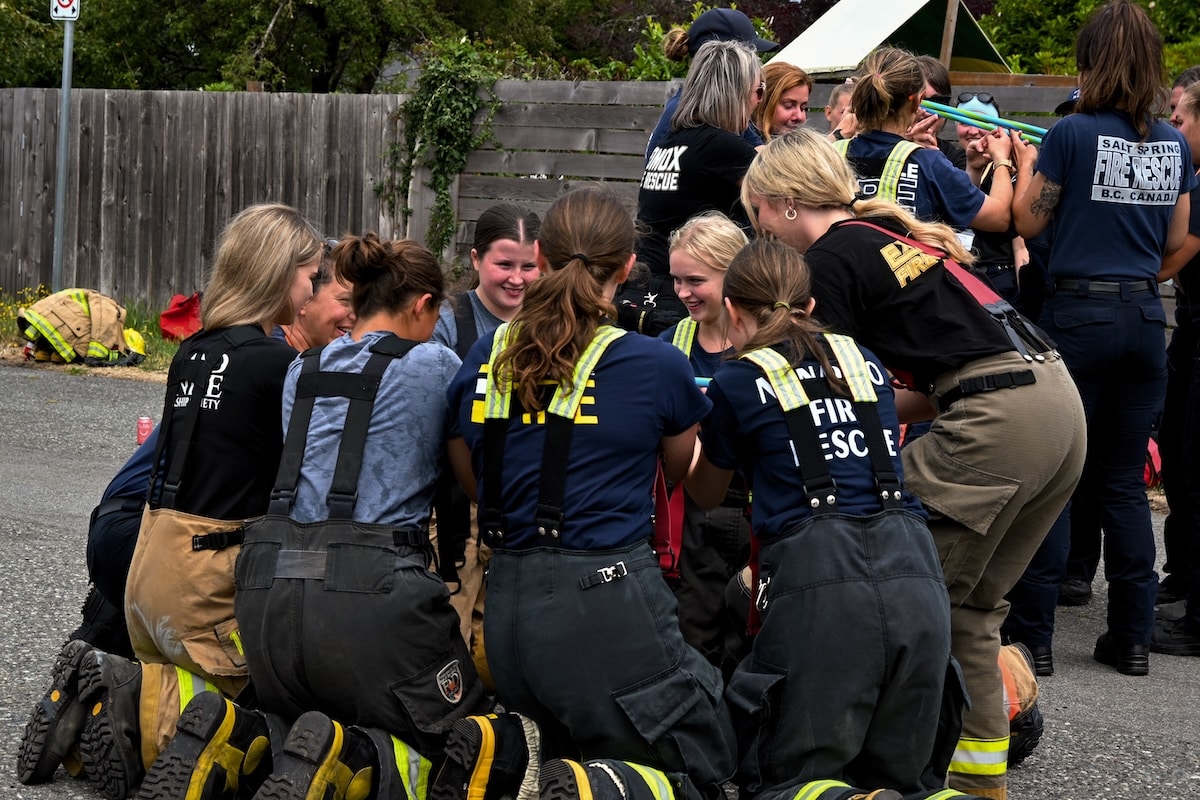
Participants cheer during a team-building exercise at Island Ignite, gear on and ready for the next evolution.
The Gap a Career Fair Can’t Close
An info session tells someone what firefighting involves. It doesn’t show them what their own body is capable of. Rogers draws that distinction directly when asked what changes after three days at camp that wouldn’t happen after a career fair.
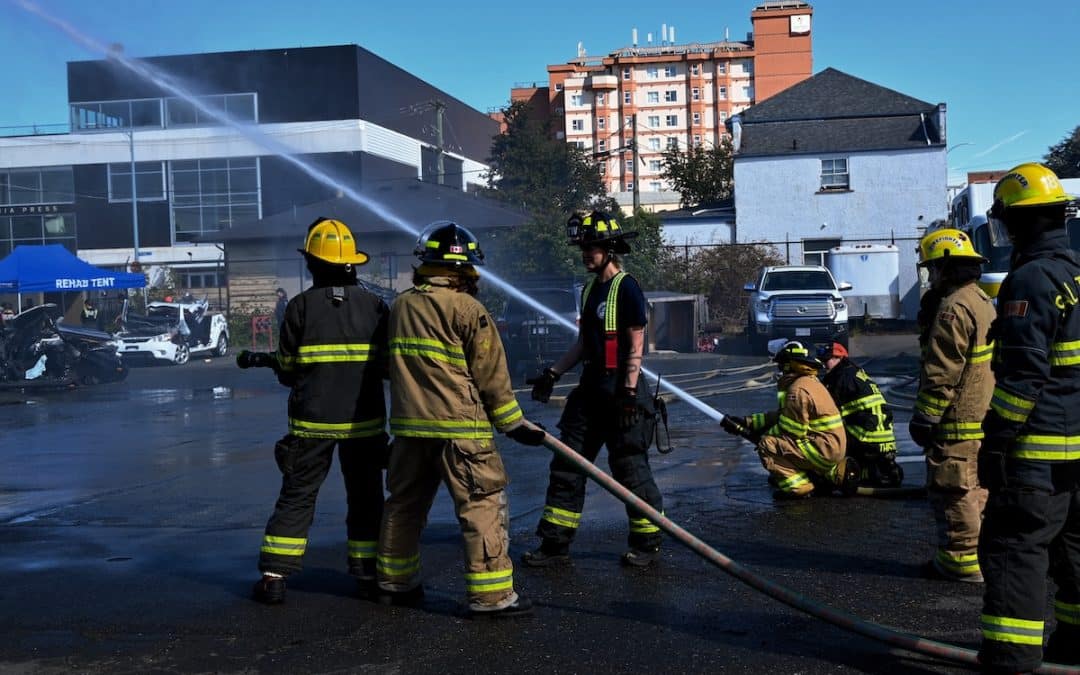
“They learn what it is to be part of a team,” she says. “They learn some resilience because they’re long days. It’s almost like a boot camp in a sense, so they get really immersed in it.” By day three, participants have rappelled, cut into cars, forced heavy doors, and worked through a smokehouse search. “If they just had an info session, they wouldn’t know what their body was capable of.”
That gap between hearing about a job and physically trying it matters more than many departments account for. It also matters because the pool of people available to fill volunteer roles is shrinking. The number of volunteer firefighters in Canada has dropped by more than 38,600 since 2016. (Fort Frances Times, citing the 2024 Great Canadian Fire Census) A department that only starts talking to candidates once they’re job-ready is competing for a smaller group of people than it was a decade ago.
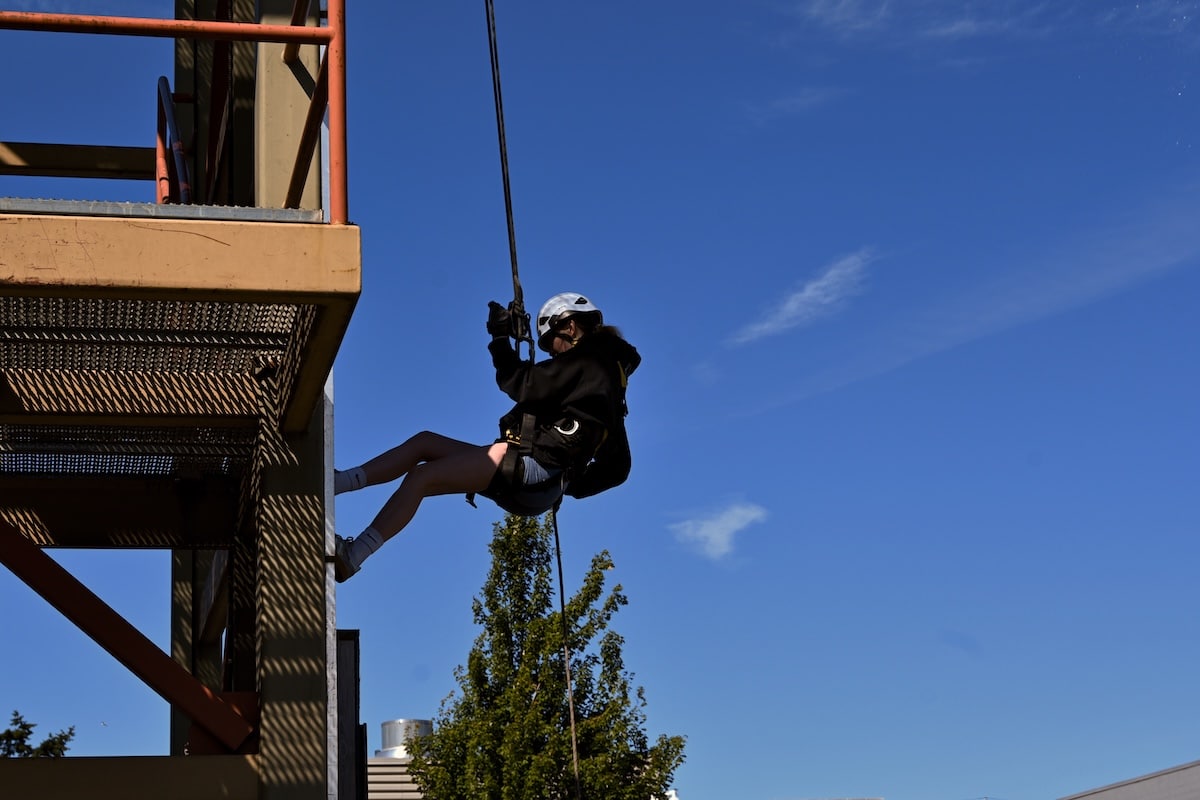
Rappelling off the tower, one of the many firsts these young women take on over three days at Island Ignite.
Confidence Is the Product, Not the Firefighter
Rogers is careful about what the camp is and isn’t. It isn’t a pipeline built to produce firefighters on schedule. What it produces, consistently, is confidence, and that shows up in ways departments can actually observe.
Mysha Dewar-McClelland, a Salt Spring Island Firefighter who works with Island Ignite and a similar cadet program, noticed the same pattern across both. “What I think you do see is a different level of confidence with people who’ve been exposed to fire-related tasks earlier,” she says. She hasn’t tracked every participant into a fire hall herself, given how small her own department’s crossover is, but she expects that early exposure “is definitely going to translate into making stronger firefighters.”
The camp’s alumni back that up directly. One alumna, now working toward her NFPA 1001 certification, traces a clear line from her first weekend at camp to where she is now: “I found that with Island Ignite, it kinda started my passion for the emergency services and being a first responder. After camp, I took my FR, and then I moved on to my DMR.” She wasn’t sure at first whether the interest would stick. It did.
That window for building interest doesn’t stay open indefinitely. Canadians aged 15 to 19 report the highest volunteer participation rate of any age group in the country, and that rate drops through early adulthood before recovering only slightly later on. (Volunteer Canada, drawing on Statistics Canada data) If a department waits until someone is out of high school to start the conversation, it may be past the point when that person was most open to it.
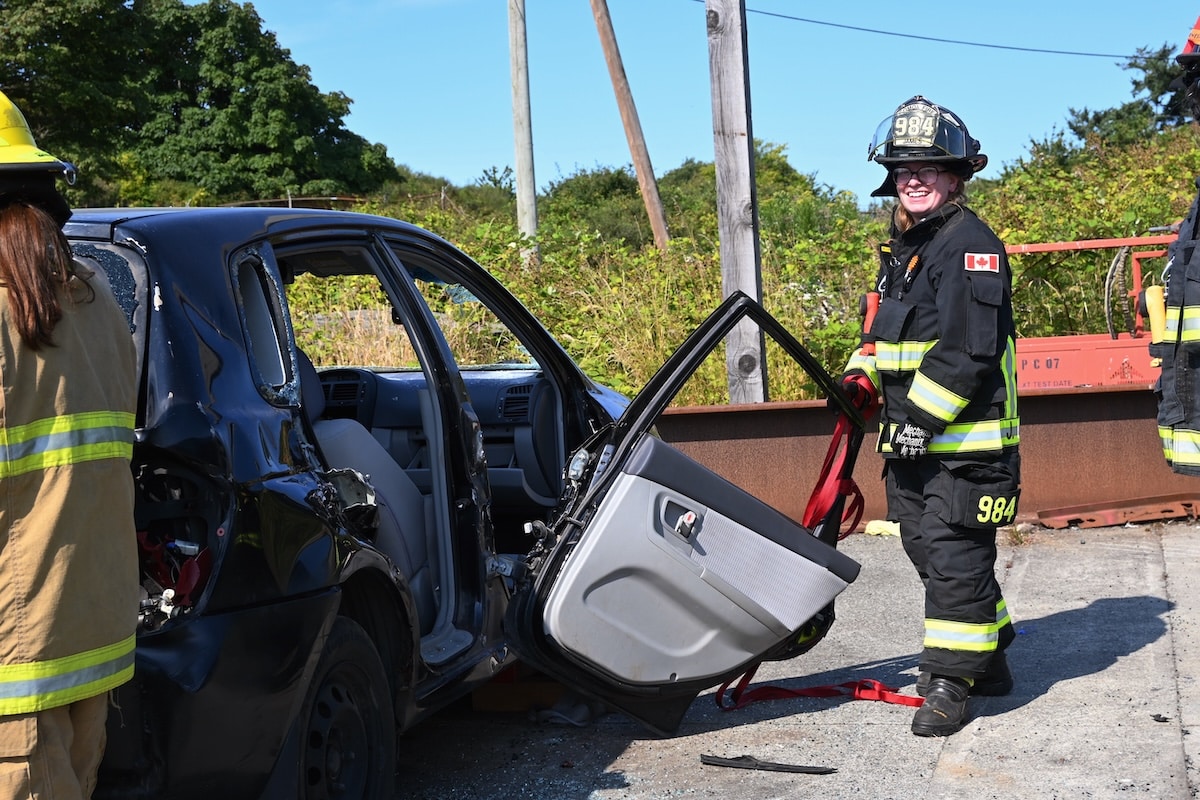
A volunteer instructor stands beside a fully removed door after an auto extrication evolution at Island Ignite.
The Underrepresentation Problem Starts Long Before Hiring
Early exposure isn’t only about pipeline volume. It’s also about who gets shown a door into the fire service in the first place, and Rogers sees that as one of the parts of the program’s value that departments underestimate most.
“Something I wish that more departments understood about a program like this is how it can really benefit our organizational health and succession planning,” she says. Island Ignite gives female firefighters a chance to instruct and step into leadership roles earlier than they typically would, and it lets them “gauge early on whether or not a leadership role is something they’re interested in.” She’s direct about why that matters beyond any one camp: “The more we diversify the fire service and lean into inclusion, the more opportunities we’re opening up to learn about what’s going on in our departments and improve organizational health.”
The numbers behind that observation are stark. Women make up about 4.4% of Canada’s roughly 152,650 career and volunteer firefighters. (Canadian Association of Fire Chiefs, via Fire Fighting in Canada) Tammy Blair, who came up through a composite department in Comox, frames the underlying point well when talking about what different recruits bring to the job: “Everyone brings something to the table based on their knowledge in life and experience in life.” A department that only recruits from the group already knocking on its door isn’t drawing from a fair sample of who could do the job well.
A Model Department Can Scale Down
Island Ignite runs entirely on volunteer labour and community partnerships. As Rogers describes it, “it’s all 100% volunteer society that we run it, and so we’re not able to achieve it if we don’t have community partnerships and corporate partnerships.” That’s a resourcing reality many departments share, and it’s worth naming instead of treating the full camp model as the only version worth attempting.
The people who’ve been through the program have specific, practical suggestions for what a smaller-scale version could look like. Asked what a department could have done earlier to reach them, two alumni were direct: “More access to junior programs” and “more advertising for junior programs.” They pointed out a real gap too, that programs like this one exist for young women their age but far less exists for younger participants or for boys the same age. Their ask was simple: open the door wider, not just further.
Dewar-McClelland frames the pitch in terms departments can act on directly: “This is an investment not just in their department… it’s truly an investment in their community and in seeing positive change.” She’s careful not to overpromise. The camp can’t guarantee a participant joins a specific department’s roster. What it can guarantee is exposure, understanding, and a stronger relationship between a department and the young people in its own community.
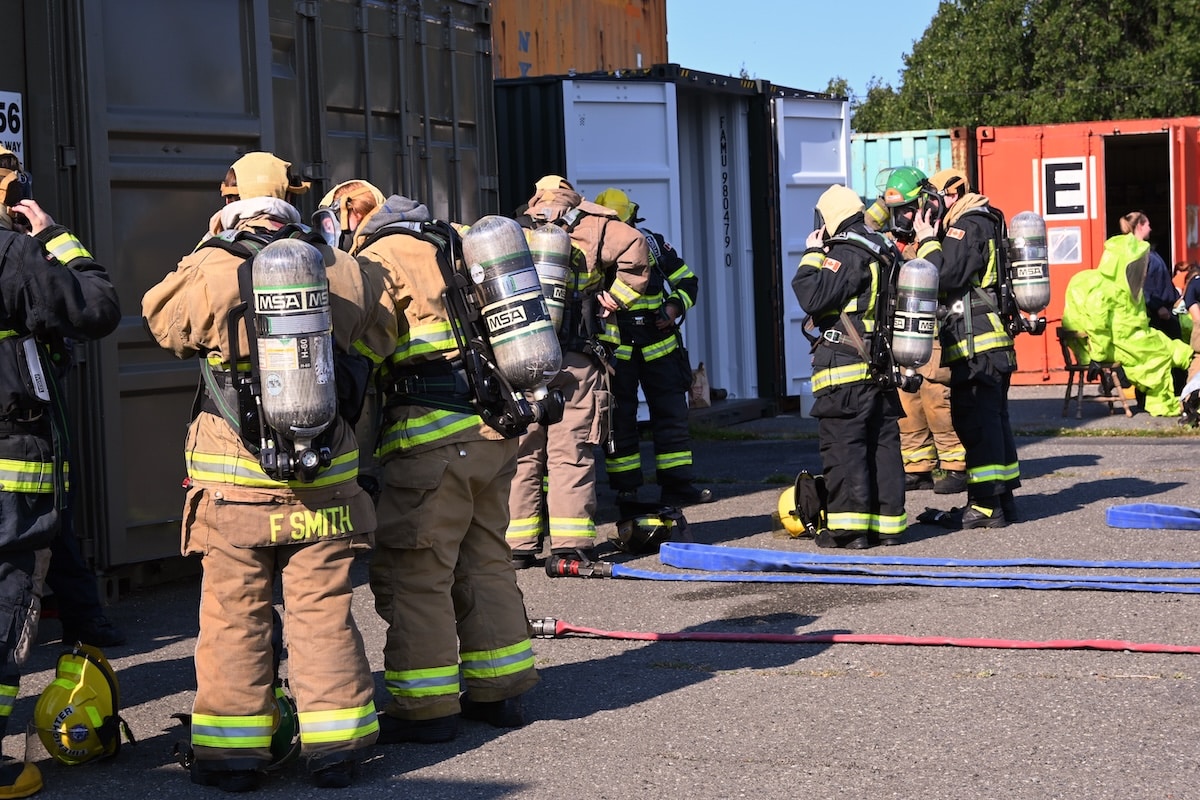
Participants gear up in full turnout gear and SCBA ahead of a search-and-rescue evolution at Island Ignite.
Final Thoughts
Rogers closes her interview with a line that gets at the heart of why any of this matters: “I don’t think unless you get to test your wings a little bit, you don’t know how far you can fly.” That’s the case for early exposure. Departments that wait for someone to arrive fully formed and job-ready are skipping the part of the process where that person actually decides the fire service is for them.
This isn’t about replicating a three-day camp. It’s about showing up earlier, in your own community, before someone else does. A junior program, a mentorship pairing, an afternoon spent letting a curious student handle a hose line, any of these can start the same process Island Ignite starts. The alumni who came through this camp already told you what would have reached them sooner. The opportunity isn’t to build something like Island Ignite. It’s to ask who in your community hasn’t been shown a way in yet, especially the young women who might never think to ask.
Learn more about Island Ignite and how to get your department involved by visiting www.islandignite.com. A special thanks to Debra Rogers and the entire Island Ignite team for letting FireWise be part of this experience.